Elif Shafak’s The Architect’s Apprentice takes us into sixteenth-century Istanbul, where the young Jahan arrives from India with his beloved white elephant, Chota. At the Ottoman court, he becomes an apprentice to Mimar Sinan and witnesses the transformation of the imperial capital through its palaces, mosques and monumental projects.
Who was Mimar Sinan?
Mimar Sinan was the greatest architect of the Ottoman Empire and the historical figure at the heart of the novel. After working as a military engineer, he became chief imperial architect in 1539 and served three sultans: Süleyman the Magnificent, Selim II and Murad III. He designed or supervised hundreds of mosques, schools, bridges, aqueducts, bathhouses and charitable complexes, shaping the skyline of Istanbul as we know it today.
Sinan considered the Şehzade Mosque the work of his apprenticeship, the Süleymaniye Mosque the work of his maturity and the Selimiye Mosque in Edirne his masterpiece. In Shafak’s novel, he is more than Jahan’s teacher: he represents patience, wisdom and the belief that buildings, like people, need strong foundations and balance.
This is the bookish tour in Istanbul I propose forThe Architect’s Apprentice:
1. Topkapı Palace – Jahan and Chota’s new world
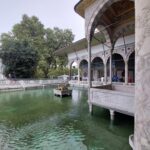
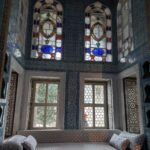
Begin where Jahan enters the complicated universe of the Ottoman court. As Chota’s keeper, he enters the palace and meets Sultan Süleyman, Princess Mihrimah, and the intrigues that shape his destiny. You can visit the palace by buying the tickts on the spot or by skiping the line, more info here.

2. Hagia Sophia – the building that challenged Sinan
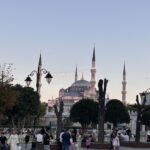
Sinan studied, repaired and strengthened this ancient monument, helping preserve its enormous dome. For Jahan and the other apprentices, Hagia Sophia becomes both an architectural lesson and a reminder of humanity’s desire to build something capable of surviving time.

3. Şehzade Mosque – the apprenticeship
Built in memory of Prince Mehmed, the mosque was considered by Sinan the work of his apprenticeship. It reflects Jahan’s own journey as a student learning that architecture demands discipline, patience and humility.

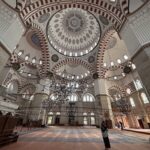



4. Süleymaniye Mosque – the heart of the novel
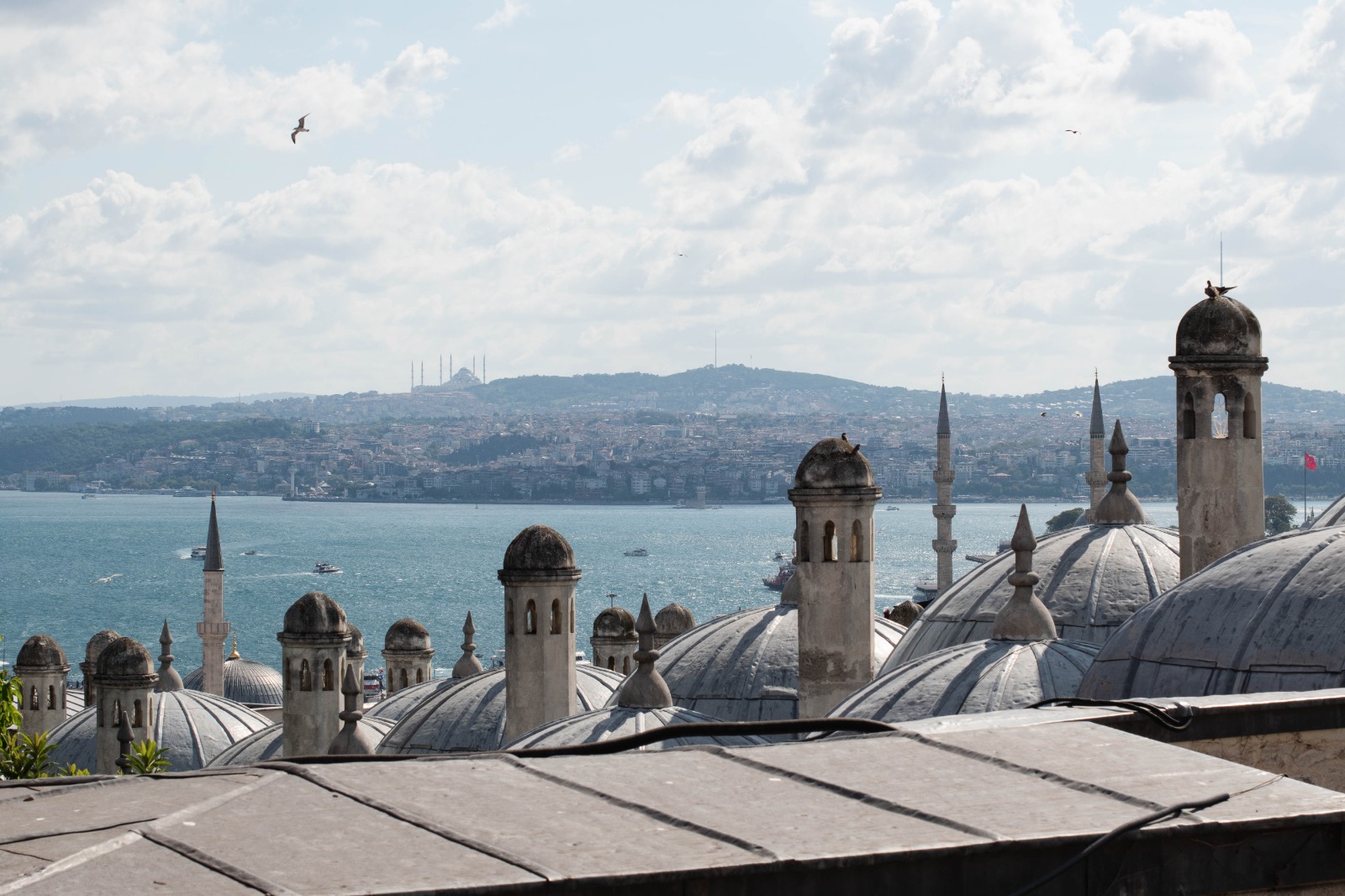
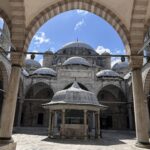
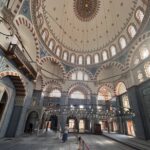
The construction of Sinan’s monumental mosque for Sultan Süleyman occupies a central place in the story. Jahan and Chota take part in the immense collective effort behind it. Walk through the courtyard, admire the dome and pause on the terrace overlooking the Golden Horn. Here, Istanbul becomes one of the novel’s characters: magnificent, chaotic and continually rebuilt.

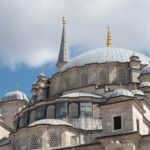

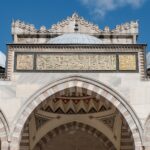
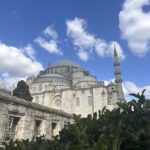
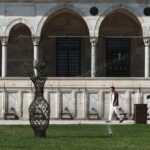
Beside the Süleymaniye complex stands Sinan’s surprisingly modest tomb, close to the place where his house once stood. The contrast with his monumental creations reminds us that the architect disappeared, but his buildings continued to tell his story.
5. Rüstem Pasha Mosque – a hidden jewel
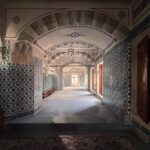
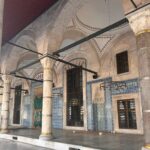
Smaller than the imperial mosques, this work of Sinan is famous for its beautiful İznik tiles. It reveals that architectural greatness does not depend only on monumental dimensions, beauty can also be hidden within a small and intimate space.
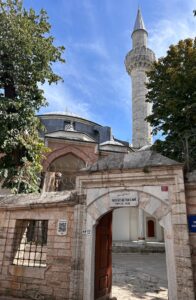
6. Haseki Hürrem Sultan Mosque – the influence of the imperial women
Commissioned by Hürrem Sultan, the powerful wife of Süleyman the Magnificent, this mosque complex was one of Sinan’s earliest major imperial projects. It originally included a mosque, school, hospital, public kitchen and fountain, showing how Ottoman architecture served both religious and social purposes.
7. The Walls of Constantinople and the Valens Aqueduct – echoes of the Roman world
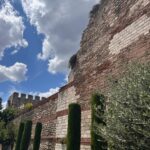
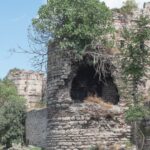
Together, the ancient walls and the Valens Aqueduct recall the Roman and Byzantine city beneath Sinan and Jahan’s Istanbul. They reflect one of the novel’s central ideas: every generation builds upon the foundations and sometimes the ruins of the past.

8. Crossing the Bosphorus – Istanbul from the water
Take the ferry from Eminönü to Üsküdar, recalling Jahan’s arrival in the city by sea. From the water, Sinan’s domes and minarets become part of a single composition, the unforgettable silhouette of Istanbul.



9. Mihrimah Sultan Mosque – Jahan’s impossible love
End at the Mihrimah Sultan Mosque near the Üsküdar ferry terminal. Designed by Sinan for the sultan’s daughter, it connects architecture with Jahan’s silent and impossible love for the princess.



This tour invites us to see Istanbul through Jahan’s eyes: as a city of sultans, masters and apprentices, ambition, jealousy and forbidden love. Sinan’s monuments are real, while Jahan remains fictional but through Elif Shafak’s story, they seem to build the city together.