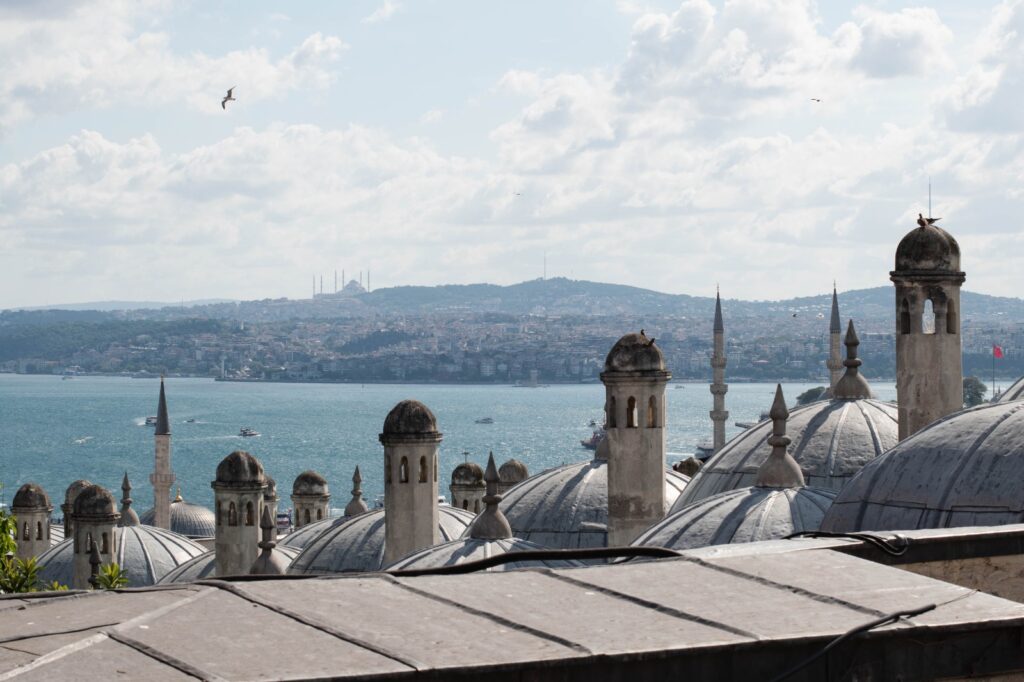

One day through cafés, bookshops, Armenian heritage and food, searching for Elif Shafak’s Istanbul.
In The Bastard of Istanbul, the city is not simply a background. It is noisy, contradictory, multicultural and full of memories, some carefully preserved, others deliberately forgotten.
My route begins with Asya, among cafés, books and the crowded streets of Beyoğlu. Then, little by little, it follows Armanoush into the Armenian memory of the city. And finally, just like the novel itself, the two worlds meet around food.
Morning with Asya
- Kazancı Yokuşu Street: Looking for Kazanci House

The Kazancı house is one of the most memorable spaces in the novel: a chaotic universe inhabited almost entirely by women, filled with food, conversations, secrets, superstitions and memories.
But there is no Kazancı house waiting to be found in Istanbul. Rather than looking for an exact address, I begin with the Kazanci street to feel the vibe of Istanbul nearby Taksim square. I started my tour here also because Elif Shafak mentioned in one interview that she used to live on Kazanci street.
2. Taksim & İstiklal: Entering Asya’s world
From here, I walk towards Taksim and İstiklal Avenue.

This is Asya’s Istanbul: young, crowded, restless and slightly rebellious. I am looking for the smaller details, people rushing past each other, old façades above modern shops, side streets, cafés and passages.
3. Aslıhan Pasajı: Among Asya’s Books
Just off İstiklal, Aslıhan Pasajı brings us even closer to Asya’s universe.
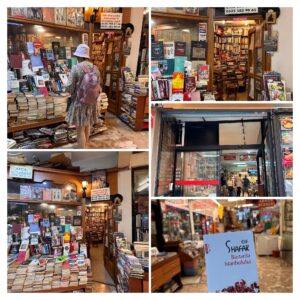
Its second-hand bookshops, sahaflar, are filled with old editions, forgotten books and shelves where you never quite know what you are going to find.
For a character surrounded by existentialism, music, ideas and endless discussions, it feels like exactly the right place.
4. Çiçek Pasajı: The Flower Passage
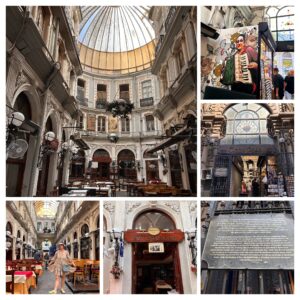
Back on İstiklal, I stop at Çiçek Pasajı. Today it is filled with restaurants and visitors, but its history belongs to the multicultural Beyoğlu that existed long before the modern avenue surrounding it.
And this is where my journey begins to change. Until now, I have been walking through Asya’s Istanbul, the city of the present. Now I start looking for Armanoush’s.
5. Üç Horan — The First Armenian Trace
Only a short distance away stands the Üç Horan Armenian Church.
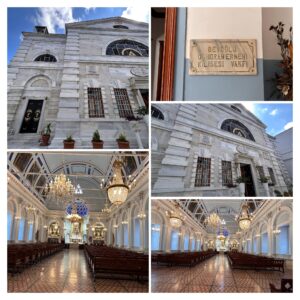
Suddenly, the Armenian presence that forms such an important part of the novel is no longer only something Armanoush talks about.It exists physically within the same streets I have just walked with Asya and the transition is almost invisible.
Afternoon with Armanoush
- Galata: Reading the City differently
I continue towards Galata. But now I am looking at Istanbul differently.
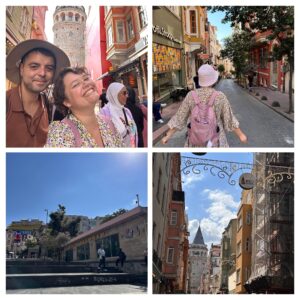
Armanoush comes to the city carrying stories inherited from people who were forced to leave it. She searches for a place she has never known but that somehow belongs to her family memory.
Walking through Galata with that idea changes the city. Behind the cafés and busy streets is another Istanbul: Armenian, Greek, Jewish, Levantine, whose traces still survive.
From here, I leave tourist Istanbul behind and travel towards Kumkapı and Samatya.
2. Kumkapı: The Armenian Istanbul
In Kumkapı, the Armenian story becomes impossible to ignore. Here stands the Armenian Patriarchate of Constantinople, one of the most important institutions of the Armenian community in Istanbul, together with Surp Asdvadzadzin, St Mary’s Armenian Church.
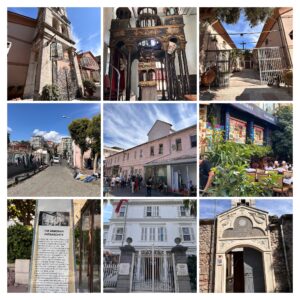
This is perhaps the most important stop for understanding Armanoush. She comes looking for the city that survives in her family’s stories. And here, fragments of that city are still alive.
3. Samatya: Memory in the Armenian Neighbourhood
From Kumkapı, I continue towards Samatya and Surp Kevork Armenian Church.
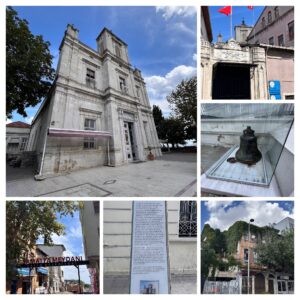
Samatya feels particularly appropriate for this journey because Armenian history here is not isolated inside a museum. It belongs to streets, houses, churches and everyday neighbourhood life.
4. Crossing the Bosphorus
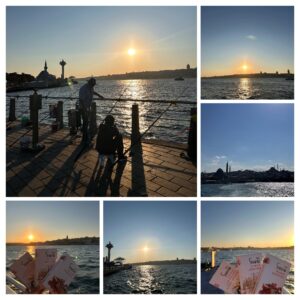
After spending the afternoon searching for the past, I return towards the water. And then I take the ferry from Europe to Asia. You can take it from different locations, I took the route Eminönü – Üsküdar, one ticket is around 1 euro and you can use the Istanbul card for buying tickets.
For a few minutes, Istanbul opens around me: Europe behind, Asia ahead, the Bosphorus between them. A city divided geographically, historically and emotionally, and yet somehow still one city. Much like the worlds of Asya and Armanoush.
Evening: Back to the Kazancı Table
Food is everywhere in The Bastard of Istanbul. The Kazancı women cook, eat, argue and remember around the table. Recipes carry traditions that sometimes survive more successfully than historical narratives.
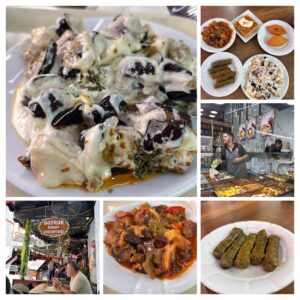
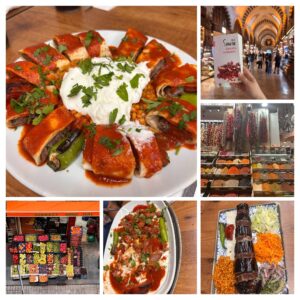
So I recommend to try the meals of the novel in one restaurant with Turkish traditional food: Buyruk Esnaf Lokantası. There you can find dolma, meze – different meals based on eggplant, other traditional Turkish meals and in some days even the famous aşure.
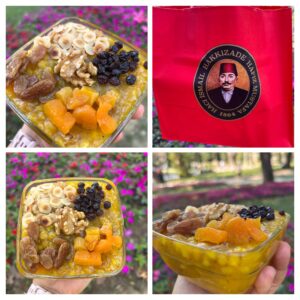
I was not so lucky so I had to look in different locations for aşure, until I found it in one historical Turkish sweets store: Hafız Mustafa 1864. Made from many different ingredients: grains, dried fruits, nuts, pomegranate and spices, and it becomes a powerful metaphor for Istanbul itself: different cultures, religions and memories sharing the same bowl while preserving their own identities.