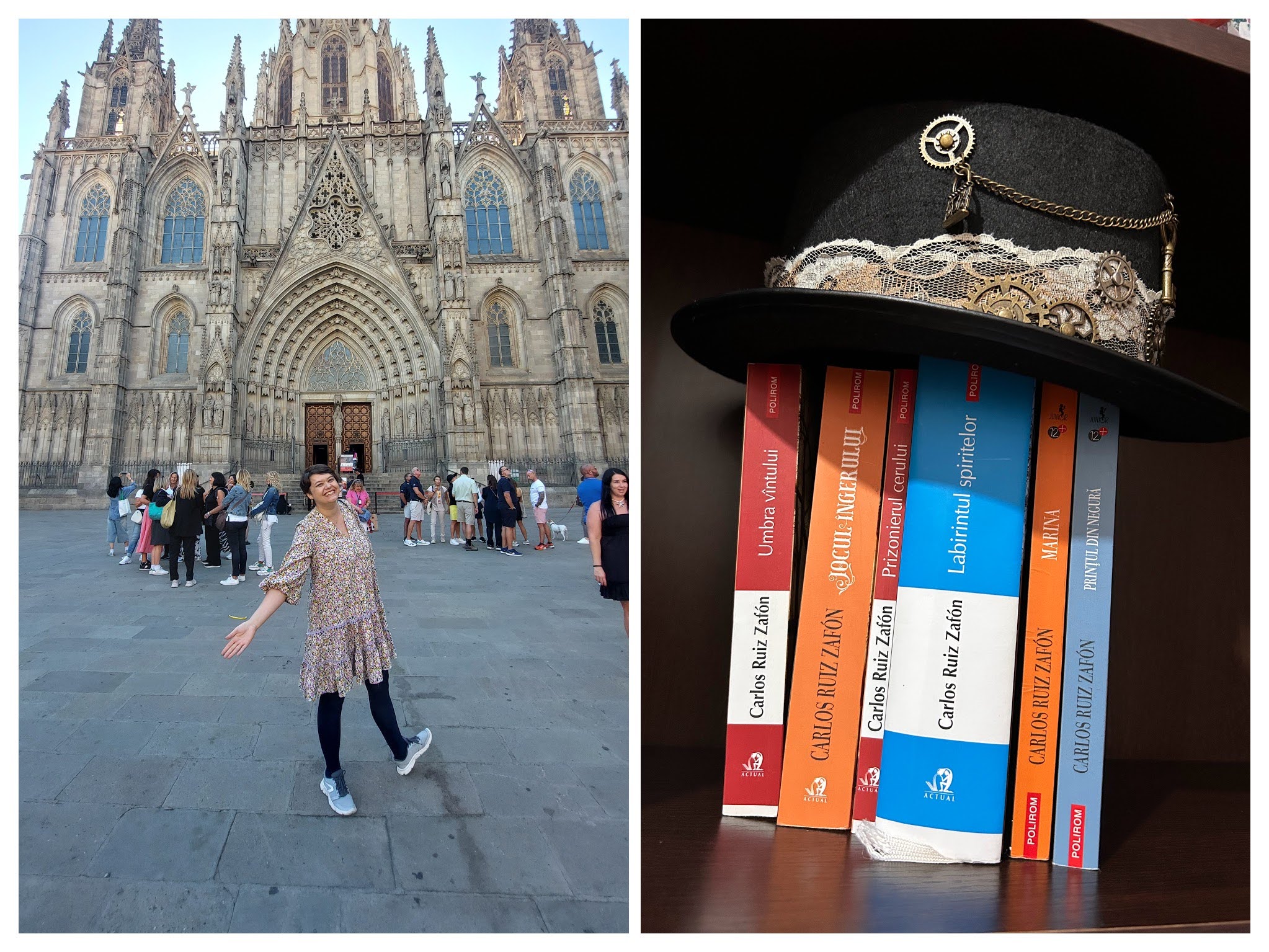
A Literary Journey into The Cemetery of Forgotten Books
In Carlos Ruiz Zafón’s The Cemetery of Forgotten Books series, Barcelona is alive, mysterious, wounded and fascinating with its streets full of stories of forbidden love, lost writers, family secrets and books saved from oblivion.
The four novels: The Shadow of the Wind, The Angel’s Game, The Prisoner of Heaven and The Labyrinth of the Spirits, lead us through different moments in the city’s history, from the years before the Spanish Civil War to the darkness of Franco’s dictatorship. Although each book has its own protagonist and mystery, they are connected by the Sempere family, their bookshop and the legendary Cemetery of Forgotten Books.
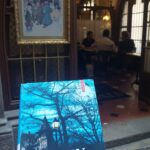
Walking through Barcelona while reading the fourth book in Zafón’s series made the city feel different. A narrow alley seemed to hide an entrance to a forgotten library. Old buildings appeared to guard the secrets of their former inhabitants, while the mist over La Rambla transformed the modern city into Daniel Sempere’s Barcelona.
Where the Journey Begins: La Rambla
The literary journey begins on Rambla de Santa Mònica, just as Daniel’s story begins in The Shadow of the Wind. One misty morning in 1945, Daniel’s father takes him through the sleeping city to a place known only by a few people.

La Rambla is now one of Barcelona’s busiest streets, but early in the morning, before the crowds arrive, it can still evoke the atmosphere of the novel. Walk towards the port, where the Columbus Monument rises above the city, and then turn into the narrower streets of El Raval. This contrast between the monumental boulevard and the shadowy alleys around it is essential to Zafón’s Barcelona: beauty and decay, light and darkness, always existing side by side.
Carrer de l’Arc del Teatre: Searching for the Cemetery of Forgotten Books
Hidden near La Rambla, Carrer de l’Arc del Teatre is traditionally associated with the fictional location of the Cemetery of Forgotten Books. The secret library does not exist in reality, but this narrow street captures its spirit. Here, Daniel chooses or is chosen by the book The Shadow of the Wind, promising to protect it for life. That single book begins a search which will connect his destiny with Julian Carax’s tragic story.


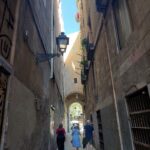
The Cemetery appears throughout all four novels. More than a physical place, it represents the memory preserved by books, protecting stories the world has forgotten and gives them another chance to find a reader.
Carrer de Santa Anna: Sempere&Sons
We continue towards the Gothic Quarter and Carrer de Santa Anna, where Zafón places the fictional Sempere&Sons bookshop. Daniel grows up above the family shop, surrounded by old books and their invisible worlds. Later, Fermín Romero de Torres joins the business, filling it with his humour, loyalty and wisdom.
The bookshop becomes one of the emotional centres of the entire series, representing an everyday mirror to the Cemetery of Forgotten Books. While the Cemetery is a sacred, mysterious place that seems to belong to another world, the bookshop keeps us grounded in the reality of daily life.
Although there is no real Sempere&Sons, the small bookshops around Carrer de Santa Anna allow readers to imagine its wooden shelves, dusty volumes and quiet conversations. Nearby, the medieval Church of Santa Anna provides a peaceful retreat from the busy streets surrounding Plaça de Catalunya.
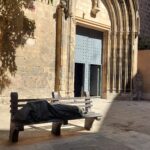

Els Quatre Gats: Barcelona’s Literary and Artistic Spirit
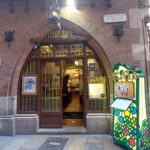
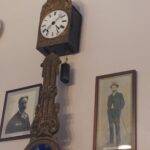
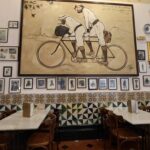
Hidden on Carrer de Montsió, Els Quatre Gats is one of the most atmospheric stops on the route. Opened in 1897, it became a meeting place for Barcelona’s artists and intellectuals, including the young Pablo Picasso. With its Gothic-inspired interior, dark wooden furniture and artistic legacy, the café still preserves something of the bohemian Barcelona that echoes through Zafón’s novels.
When I stepped inside, I felt immediately the connection to Zafón’s world, a place where writers, booksellers and mysterious strangers might gather over coffee while secrets circulate between tables. Naturally, I ordered the familiar combination mentioned in the books: jamón, fries and beer.



Plaça Reial: Daniel, Clara and Fermín
Surrounded by arcades, palm trees and nineteenth-century façades, Plaça Reial is connected with some of Daniel’s most important unexpected meetings.
Here, he visits the home of bookseller Gustavo Barceló and meets Barceló’s blind niece, Clara, who becomes his first great infatuation. The square is also associated with Fermín, the homeless man who will become his closest friend and one of the series’ most beloved characters.

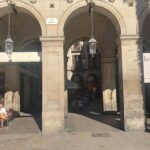
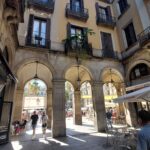
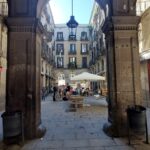
Today, Plaça Reial is alive and crowded, but its covered passages still possess a certain mystery. Arrive early in the morning and you may briefly glimpse the more intimate square described in the novel.
Barcelona Cathedral: Love, Memory and the Carax Family
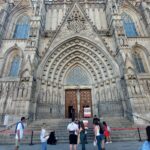
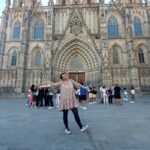
The towers of Barcelona Cathedral, also known as La Seu, rise above the narrow streets of the Gothic Quarter. The area around the cathedral is connected with Julián Carax’s family history and the meeting of his parents, the hatmaker Antoni Fortuny and Sophie Carax.
The cathedral brings another dimension to the route. Zafón’s characters are often haunted by choices made before they were born, and religious buildings appear as silent witnesses to promises, betrayals and lives shaped by the past.
Plaça de Sant Felip Neri: The Scars of History
Few places capture the emotional atmosphere of the novels as powerfully as Plaça de Sant Felip Neri. Hidden within the Gothic Quarter, the square is beautiful and deeply melancholic. Its church façade still bears the scars of the bombing of Barcelona in January 1938, during the Spanish Civil War, when the attack killed dozens of people, many of them children.
In The Shadow of the Wind, the square is associated with Nuria Monfort, a crucial figure in Daniel’s search for the truth about Julián Carax. Her story gradually reveals how love, fear and political violence shaped the destinies of those who came before him. Here, the boundary between Zafón’s fiction and Barcelona’s real history feels especially thin.
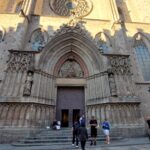
Santa Maria del Mar and Carrer de Montcada
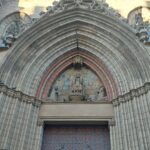
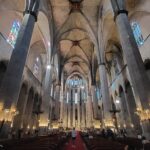
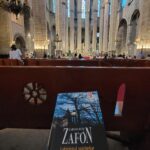
Rising above the narrow streets of the Ribera district, Santa Maria del Mar is one of the finest examples of Catalan Gothic architecture. Its façade hides a remarkably spacious interior, where tall octagonal columns, Gothic arches and filtered light create an atmosphere of silence and solemnity.
The streets and old palaces around Carrer de Montcada, behind the basilica, inspired the setting of the Santa Lucía Hospice. Daniel and Fermín visit the hospice while investigating the history of Julián and Penélope, hoping to find Jacinta Coronado, Penélope’s former nurse.


Montjuïc: The Darkest Side of Zafón’s Barcelona
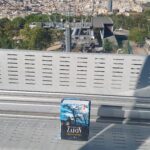
Montjuïc stands above Barcelona and carries some of the darkest memories in the series. The castle served as a military prison and a site of political repression. In The Prisoner of Heaven, Fermín’s past leads us into the terrifying world of imprisonment, cruelty and survival during the Franco era. The novel reveals how his life became connected with David Martín, the tormented writer at the heart of The Angel’s Game.
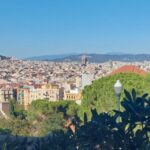
A visit to Montjuïc Castle adds important historical context to the story. The panoramic views over Barcelona are beautiful, but the fortress reminds us that Zafón’s city is not only romantic and mysterious, it is also marked by dictatorship and violence. You can buy the cable car roundtrip tickets here.

Tibidabo: Mansions, Mist and Forgotten Lives
For the final part of the journey, leave the historic centre and travel towards Tibidabo.
In Zafón’s novels, the hills above Barcelona are populated by imposing villas, abandoned houses and families guarding dangerous secrets. The Aldaya mansion from The Shadow of the Wind belongs to this world of faded wealth and hidden tragedy.
Tibidabo also appears prominently in The Angel’s Game, whose protagonist, David Martín, lives in a mysterious tower house. His Barcelona is darker and more supernatural than Daniel’s, filled with obsession, manipulation and the unsettling power of stories.
There are many more places connected to Zafón’s literary universe waiting to be discovered, but this is my personal selection. I have not included locations associated with his novels, Marina and The Prince of Mist, as I read them only after visiting Barcelona. But I know I will return, there are still many stories and places left to explore.