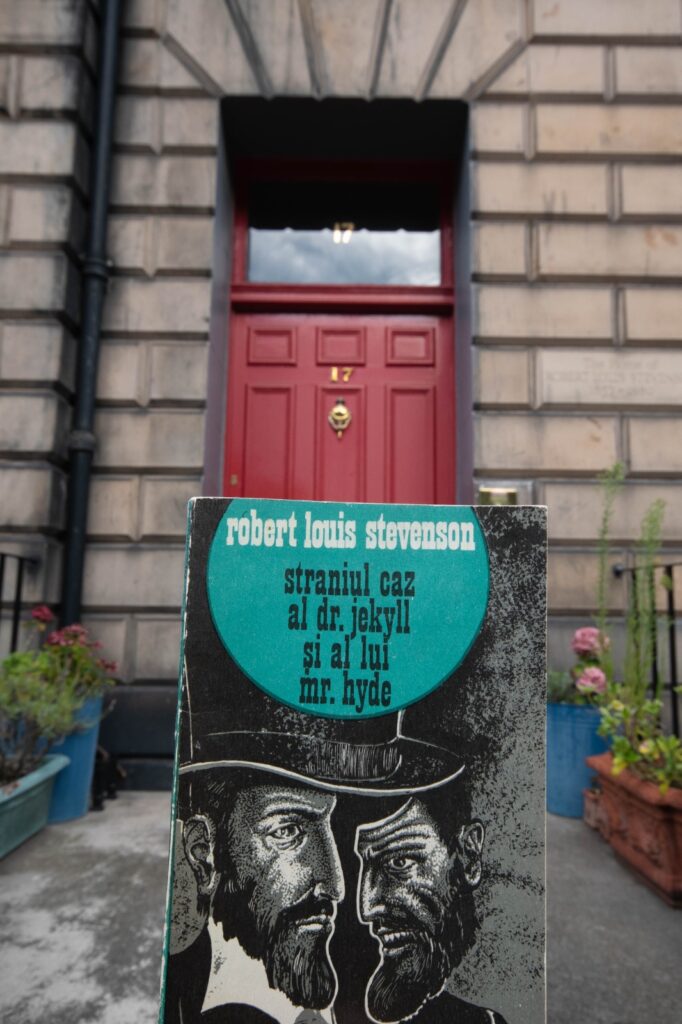
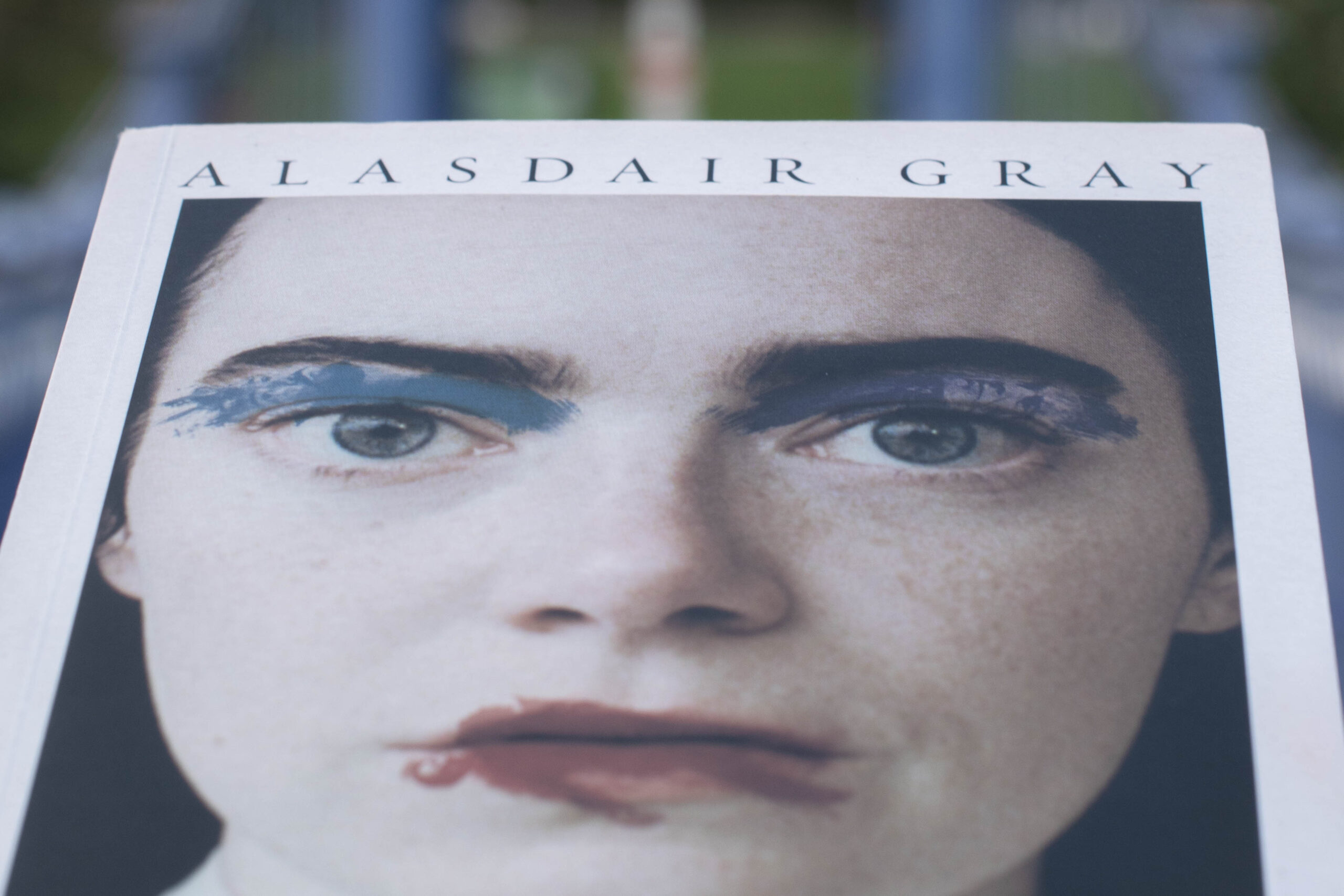
Poor Things in Glasgow: Following Bella Baxter and Alasdair Gray

Although Yorgos Lanthimos’s film removes Glasgow from the story, Alasdair Gray’s original novel ”Poor Things” is deeply rooted in the city of Glasgow. Victorian terraces, medical institutions, parks and bridges shape the strange world of Bella Baxter. This bookish tour follows some of the most important Glasgow locations connected to the novel.

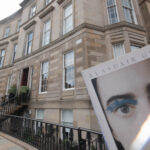
1. No. 18 Park Circus – Godwin Baxter’s House

The elegant terraces of Park Circus provide the setting for the home of the eccentric surgeon Godwin Baxter. According to Archibald McCandless’s version of the story, this is where Baxter conducts his extraordinary experiment and brings Bella to life.

Although the house is real, what occurs inside belongs to Gray’s deliberately uncertain narrative. The novel continuously asks us to decide which version of Bella’s life, if any can be trusted.
2. Park Gardens Staircase – The Granite Steps

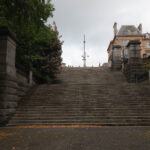
From Park Circus, descend towards Kelvingrove Park using the monumental Park Gardens Staircase. In the novel’s notes, Gray compares this great granite stairway to the famous steps of Odessa.

Constructed in the nineteenth century, the staircase creates a dramatic transition from the respectable world of Park Circus to the park below. It feels perfectly suited to Gray’s Glasgow: impressive and theatrical, yet partly hidden from everyday view.

3. Kelvingrove Park – Stewart Memorial Fountain

Known as West End Park during the period in which the novel is set, Kelvingrove Park is one of the principal landscapes of Poor Things. Bella and McCandless walk through its winding paths, share their first kiss here and cross the park on the morning planned for their wedding.

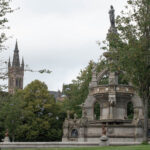
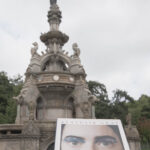
Within Kelvingrove Park stands the Stewart Memorial Fountain, called the Loch Katrine Memorial Fountain in the novel. It commemorates Lord Provost Robert Stewart and the introduction of fresh water from Loch Katrine into Glasgow.

Gray transforms the fountain into more than a decorative monument. Its changing condition restored, neglected and left without water becomes a symbol of Glasgow’s civic ambitions and its frequent failure to care for its own heritage.
4. The University of Glasgow

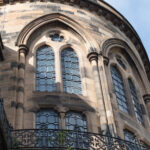
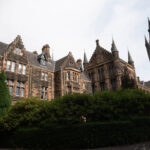
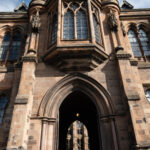
Cross the River Kelvin and climb towards the University of Glasgow. According to McCandless’s account, he enrolled here as a medical student in 1879, while Godwin Baxter worked as an assistant in the anatomy department.

The university’s Gothic architecture reinforces the novel’s Frankenstein-like atmosphere. It also represents the world of male scientific authority that creates Bella, studies her and repeatedly attempts to explain her before she begins to define herself.
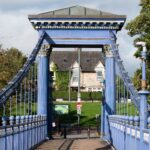
5. St Andrew’s Suspension Bridge

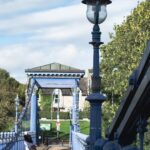
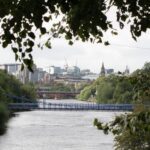
The second part of the tour begins beside the River Clyde at St Andrew’s Suspension Bridge. According to McCandless, Victoria McCandless jumped from this bridge while pregnant. Her body was recovered from the river before Godwin Baxter supposedly transformed her into Bella.

Bella, or Victoria later, rejects this account in her own “Letter to Posterity.” The bridge therefore represents the central uncertainty of the novel: was Bella truly created through Baxter’s experiment, or was the entire story invented by her husband?
6. Glasgow Cathedral and Necropolis – The Baxter Mausoleum

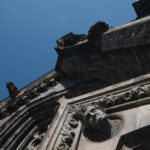
Continue through Glasgow Green and towards the Cathedral Precinct, founded in the twelfth century and dedicated to Saint Mungo, the cathedral is one of Scotland’s most important surviving medieval buildings.

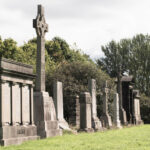
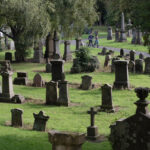
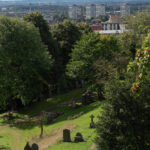
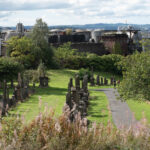
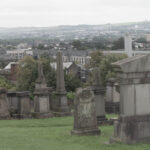
Crossing the Bridge of Sighs the Glasgow Necropolis rises above the city. Established in 1832 and inspired by Père-Lachaise Cemetery in Paris, this Victorian garden cemetery contains elaborate monuments dedicated to Glasgow’s merchants, industrialists and prominent citizens.

Gray claims that the three principal characters of Poor Things are buried here together in the Baxter Mausoleum. The monument associated with the novel is actually the Monteath Mausoleum, an imposing circular structure built in 1864.

7. Glasgow Royal Infirmary

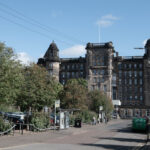
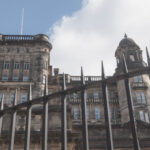
Beside the Cathedral stands Glasgow Royal Infirmary, where Archibald McCandless works as a house doctor. According to the novel’s chronology, McCandless and Bella sign a civil marriage contract in January 1884 while he is employed here.

The hospital connects the story with Glasgow’s distinguished medical tradition, but it also represents the institutional authority questioned throughout the novel. Doctors repeatedly attempt to define Bella through her body, her supposed medical history and the circumstances of her creation.

Bella ultimately enters the medical profession herself. By acquiring the same scientific knowledge that was once used to control her, she transforms medicine into an instrument of independence and social reform.

8. The Former Royal Exchange – Today’s Gallery of Modern Art

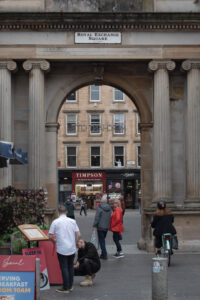
The final stop is Royal Exchange Square, where the Gallery of Modern Art now occupies the former Royal Exchange. Completed in 1829, the grand neoclassical building with its imposing portico and Corinthian columns was created as a monument to Glasgow’s commercial confidence.

Its splendour represents the wealth accumulated by the city’s merchant class. However, it also encourages visitors to consider the origins of that prosperity, including Glasgow’s connections with imperial trade and colonial exploitation.

This makes the former exchange particularly relevant to Bella’s political awakening. During her travels, she becomes increasingly aware of poverty, capitalism and the inequalities hidden behind respectable society. The building therefore provides a fitting conclusion to a tour that moves from private privilege and scientific authority towards broader questions of money, power and social responsibility.

Rediscovering the Glasgow Removed from the Film

Walking through these locations reveals a dimension of Poor Things that the film adaptation largely leaves behind. In Gray’s novel, Glasgow is not simply the place where the story begins.

Park Circus represents privilege and the protected world created by Godwin Baxter. The university and hospital embody medical knowledge and male authority. The polluted rivers expose the darker side of industrial progress. The Necropolis preserves the stories Glasgow tells about its powerful citizens, while the Royal Exchange displays the wealth upon which Victorian respectability was built.

Bella moves through these spaces without allowing any of them to define her completely. Her transformation is therefore not only physical or intellectual. It is also a movement away from the identities imposed upon her by husbands, doctors and storytellers.

Her journey takes her across the world, but its most important questions begin and end in Glasgow, a city that, like Bella herself, can never be explained through only one version of the story.

The locations and their connections with the novel are documented by the Alasdair Gray Archive’s official Poor Things tour.

Similar Posts

Leave a Reply

Your email address will not be published. Required fields are marked *