Few writers are as closely connected to Edinburgh as Robert Louis Stevenson. Born here in 1850, Stevenson grew up between the elegant streets of the New Town and the darker, labyrinthine world of the Old Town. Although The Strange Case of Dr Jekyll and Mr Hyde is set in London, the fascination with duality seems deeply rooted in the contrasts of his native city.
This walk follows Stevenson through Edinburgh from his childhood home to the closes of the Old Town, from the real-life story of Deacon Brodie to the darker world of The Body Snatcher.
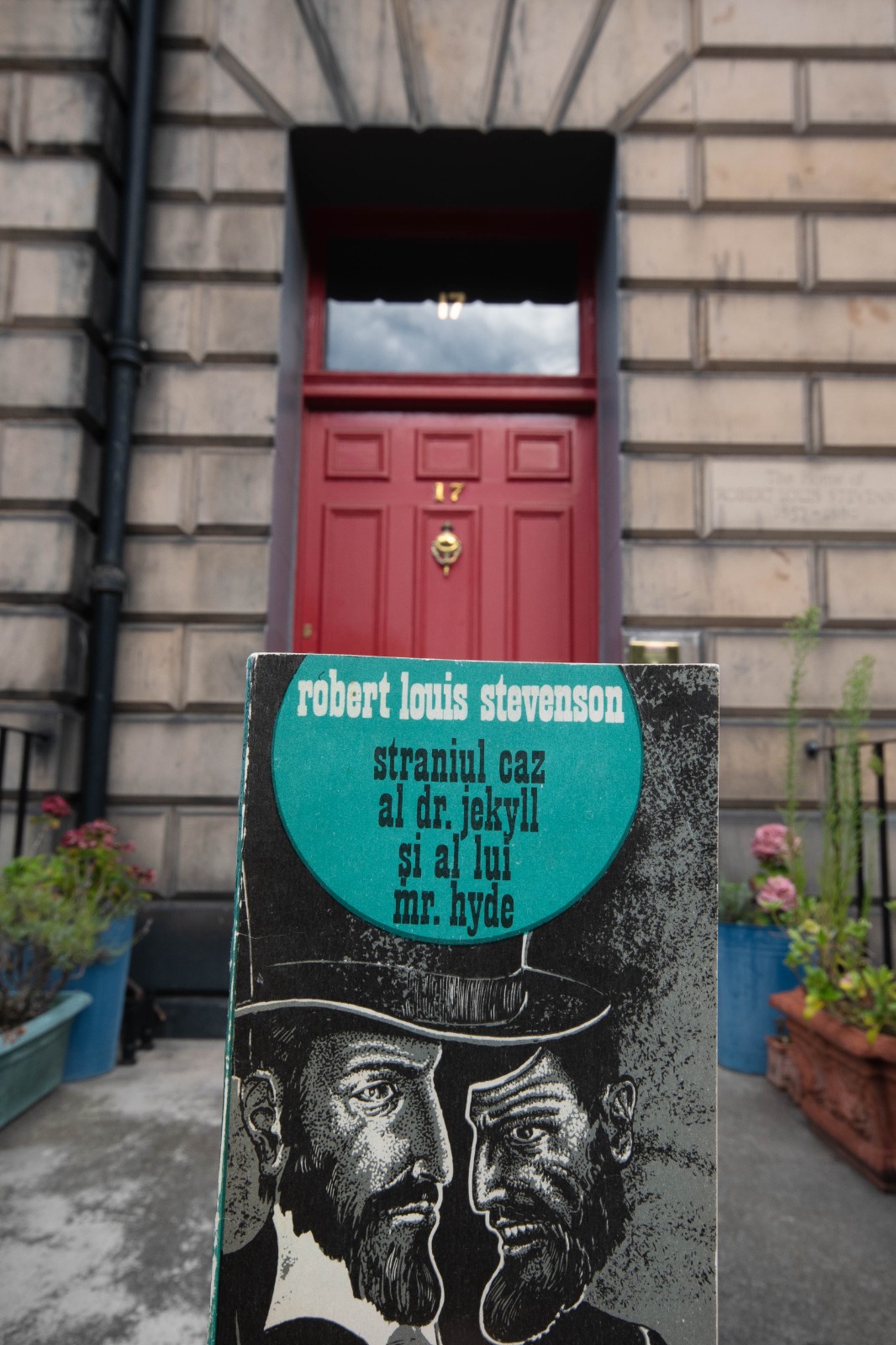
1. 17 Heriot Row – Stevenson’s Childhood Home
Our journey begins in Edinburgh’s elegant New Town, at 17 Heriot Row, where Stevenson spent much of his childhood. He was born into a prosperous family of lighthouse engineers and was initially expected to follow the same profession.
The ordered Georgian streets surrounding his home represent the respectable Edinburgh in which he was raised, a world that can easily make us think of the cultivated and socially respected Dr Jekyll. Yet Stevenson was fascinated by a very different Edinburgh waiting beyond these streets.



2. From New Town to Old Town
Walk towards Princes Street Gardens and look up at the Old Town rising dramatically above you.
This geographical contrast is essential to understanding Stevenson’s Edinburgh. On one side stands the carefully planned Georgian New Town; on the other, the medieval maze of narrow streets, closes and towering tenements.
It is tempting to see in these two faces of Edinburgh an echo of Stevenson’s most famous creation: Jekyll and Hyde respectability and darkness occupying the same space.





3. Deacon Brodie – The Real-Life Jekyll and Hyde?
Continue towards the Lawnmarket, where the story of William Deacon Brodie brings us remarkably close to Stevenson’s fictional world.
Brodie was a respected Edinburgh cabinetmaker and prominent citizen by day, while secretly leading a second life involving burglary and crime. Stevenson knew his story from childhood, and his family even owned furniture made by Brodie.
The parallels with Jekyll and Hyde are striking: the respectable public identity hiding a darker private existence.
Rather than calling Brodie the direct model for Jekyll and Hyde, however, he is better understood as one of the stories that helped shape Stevenson’s lifelong fascination with double lives and divided identities.


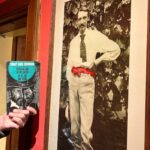
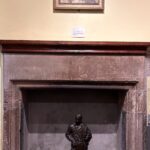
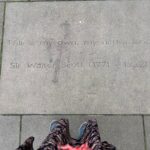
4. The Writers’ Museum – Meeting Stevenson
Hidden inside beautiful Lady Stair’s Close, the Writers’ Museum celebrates three giants of Scottish literature: Robert Burns, Walter Scott and Robert Louis Stevenson. Stevenson collection brings us closer to the man behind the books through personal objects, manuscripts, portraits and memorabilia.
This is the perfect place to remember that Stevenson was much more than the author of Jekyll and Hyde. His imagination gave us the adventures of Treasure Island, the historical Scotland of Kidnapped and some of the strangest and darkest tales of Victorian literature.
5. Greyfriars Kirkyard – The Body Snatcher
From the Royal Mile, walk towards Greyfriars Kirkyard, one of Edinburgh’s most atmospheric historic cemeteries.
Here our literary trail moves from Jekyll and Hyde to Stevenson’s chilling short story The Body Snatcher.


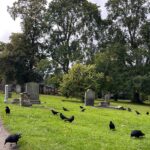
The tale follows men involved in obtaining corpses for medical dissection and reflects a disturbing chapter in nineteenth-century Scottish history, when the demand for anatomical bodies encouraged grave robbing and ultimately became associated with the notorious crimes of Burke and Hare. Among Greyfriars’ weathered gravestones, Stevenson’s gothic imagination suddenly feels much less distant.
6. The University of Edinburgh
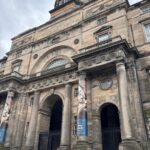
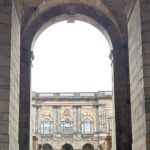
Stevenson enrolled at the University of Edinburgh, initially studying engineering in accordance with his family’s expectations. But engineering was not his path. He eventually turned towards law before fully embracing literature.
There is something particularly appealing about standing here knowing that one of Scotland’s greatest storytellers was once expected to become an engineer. The young Stevenson was already moving between different worlds family expectations and artistic ambition, respectable society and bohemian Edinburgh, another kind of duality that would later become so important in his writing.
7. Calton Hill – Looking over Stevenson’s Edinburgh
Finish the walk on Calton Hill. From here, Edinburgh seems to reveal its different personalities at once: the ordered streets of the New Town, the dramatic silhouette of the Old Town, monuments, church towers, narrow streets and the landscape beyond.




Edinburgh through Robert Louis Stevenson is therefore not quite a tour of places described in his novels. It is a journey through the city that shaped the writer an Edinburgh of respectable façades and hidden closes, reason and darkness, adventure and fear.